Site blog
We would like to share the latest edition of the eTwinning newsletter, which introduces the new Future-ready Schools theme and highlights upcoming events, classroom resources and professional development opportunities for educators across Europe.
What you will find in this edition:
- 2026 eTwinning Annual Conference (1–3 October 2026) - Join the live stream of this year’s conference "Future-ready schools: Empowering teachers and learners" featuring the launch of the new eTwinning theme and the European eTwinning Prize ceremony.
- New eTwinning theme: Future-ready Schools – Over the next two years, eTwinning will explore how schools can strengthen skills, resilience and inclusion to prepare learners for a rapidly changing world. Teachers can already access the new theme page and classroom resources, including a dedicated eTwinning card game.
- Building basic skills through new eTwinning book - The new 2026 eTwinning book showcases how projects can help develop literacy, mathematics, science, digital and citizenship competences, turning basic skills into skills for life.
- Professional development opportunities - Self‑paced courses include Teaching in STEM classes through the lens of the Thinking Classroom concept and Inclusive numeracy through real‑world data and eTwinning. Upcoming webinars focus on resilience (19 October) and designing eTwinning projects for future‑ready students (20 October).
⬇️⬇️You can find the latest eTwinning Newsletter here⬇️⬇️
eTwinning newsletter
The Office of the Secretary-General of the European Schools (OSGES) is pleased to share the Irish Guidance Support Service to the European Schools, an initiative designed to support pupils and families interested in exploring education, training and future opportunities in Ireland.
As part of this initiative, a series of online webinars will take place in October 2026, providing practical information on educational pathways, Irish higher education institutions and the application process for European Baccalaureate pupils.
Exploring Next Steps and Pathways in Ireland
Frameworks of Qualifications in Europe and Ireland
📅 6 October 2026
🕕 06.00pm (CET)
Explore the different education, training and apprenticeship pathways available in Ireland, including alternatives to traditional higher education.
Introduction to Higher Education Institutions in Ireland
📅 13 October 2026
🕕 06.00pm (CET)
Discover higher education opportunities in Ireland, how European Schools qualifications are recognised and how to navigate the Irish admissions process.
Applying through the Central Applications Office (CAO)
📅 20 October 2026
🕕 06.00pm (CET)
Learn how the CAO application process works and what European Baccalaureate pupils need to know when applying to Irish higher education institutions.
Registration for this year's webinars is now open.
Disclaimer: This initiative is not organised nor sponsored by OSGES.
What you will find in this edition:
- European Day of Languages - Discover resources and initiatives that showcase how language learning supports democracy, intercultural dialogue and social inclusion. The edition also highlights the Juvenes Translatores competition and an online event on how languages shape inclusion.
- Latest PISA results - Explore insights from the 2026 PISA results and learn how eTwinning can support the development of basic skills through collaborative learning and meaningful use of digital tools.
- Survey on media and digital literacy in schools - Teachers and stakeholders are invited to share their views on media and digital literacy, helping shape future approaches to critical thinking and responsible engagement with online information. The survey is open until 1 October 2026.
- eTwinning Annual Conference 2026 (1–3 October) - This year’s conference "Future-ready schools: Empowering teachers and learners" will feature the launch of the new eTwinning theme, keynote speakers, a pupil panel and the European eTwinning Prize ceremony. Key sessions will be available via livestream.
- Courses - Due to the EU Academy migration, autumn courses will be offered in a self‑paced format.
- Webinars - Upcoming webinars cover coding with AI (14th September), teacher collaboration (21th September), empathetic AI for literature and social and emotional learning (16th October), and building resilience for growth (19th October).
- Articles and resources - Recent publications explore cyberbullying prevention, literacy and language development through eTwinning, new self‑paced courses, Roma inclusion in education, and meaningful approaches to teaching and learning mathematics.
⬇️⬇️You can find the latest ESEP Newsletter here⬇️⬇️
European School Education Platform newsletter
We would like to share the latest edition of the European Digital Education Hub newsletter, which focuses on digital sovereignty in education, self‑reflection tools for schools and insights from experts working at the intersection of AI and education.
What you will find in this edition:
- Workshop report: EU EdTech for Sovereign Education Futures - Explore the outcomes of the Hub’s June community workshop in Brussels, where participants discussed digital sovereignty and collaborative approaches to strengthening the European EdTech ecosystem.
-
Self‑reflection tools for schools - A selection of practical tools designed to help schools assess and improve inclusion, wellbeing and the meaningful use of digital technologies, supporting strategic planning for the new school year.
-
Interview with Hasan Abu‑Rasheed - Meet the AI researcher and Hub member working on explainable and sovereign AI in education, who shares insights into his work and the value of interdisciplinary collaboration within the Hub community.
- Onboarding calls for new Hub members - Introductory sessions on 5, 14 and 26 October 2026 provide guidance on how to make the most of the Hub's resources, activities and community.
⬇️⬇️You can find the latest EDEHub Newsletter here⬇️⬇️
European Digital Education Hub newsletter - 15 September 2026
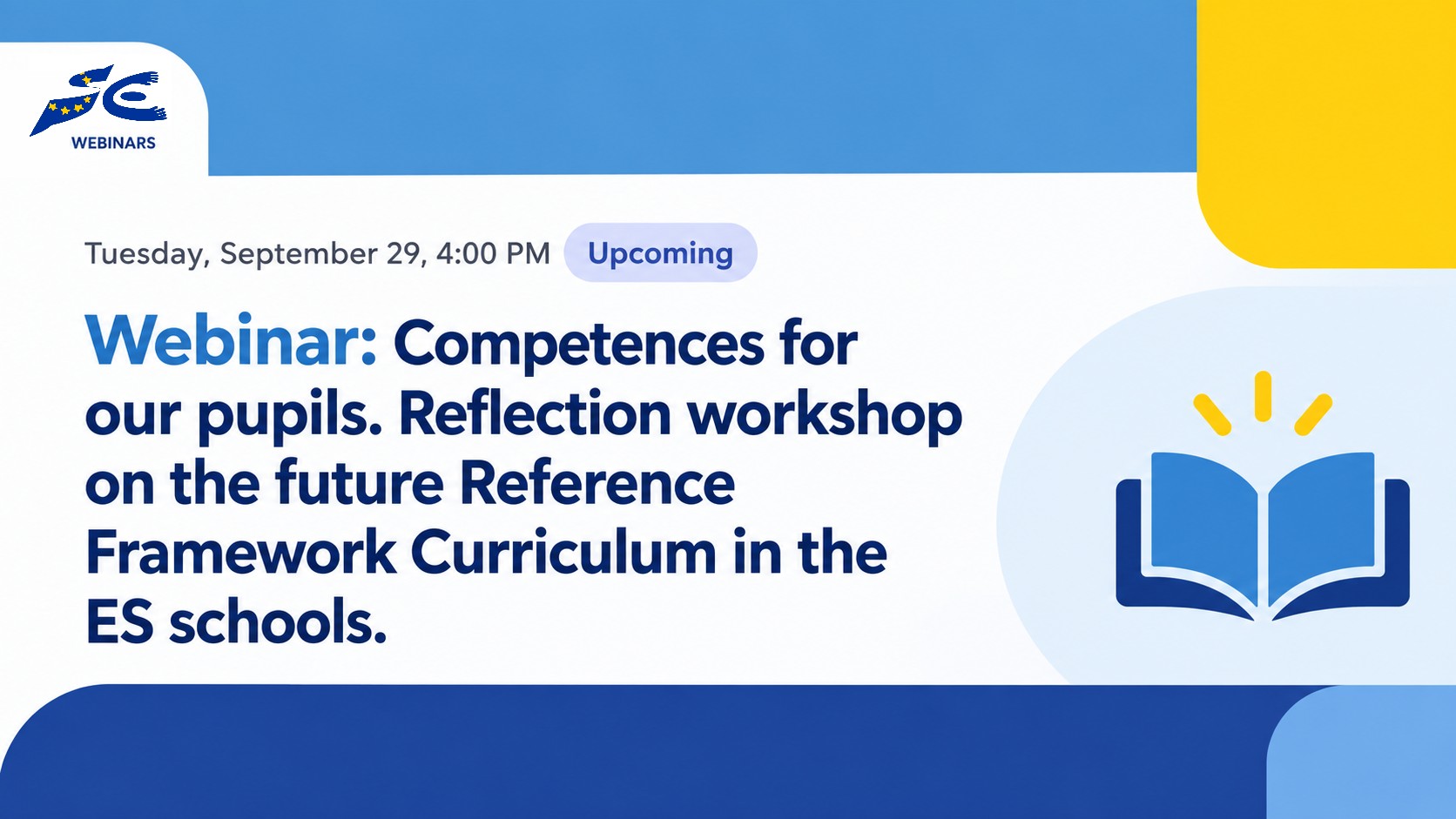
In this webinar, Dana Musilova, Eric Cillien and Sybille Maiwald, European Schools Inspectors, together with Ciprian Fartusnic, Head of the Pedagogical Development Unit, will invite participants to reflect on the competences that should shape teaching and learning in the European Schools and their role in the future Reference Curriculum Framework.
Building on the Mission and Vision document, the session will introduce the work carried out so far by the Reference Curriculum Framework Working Group, present the draft competence matrix and explore the proposed learner profiles for each education cycle.
Participants will have the opportunity to reflect on these proposals, ask questions and contribute feedback to the next stages of the development process.
Competences for our pupils: Reflection workshop on the future Reference Framework Curriculum in the ES schools
📅 29 September 2026
🕓 04.00pm (CET)
👤 Presenters: Dana Musilova, Eric Cillien, Sybille Maiwald and Ciprian Fartusnic
The Office of the Secretary-General of the European Schools (OSGES) is pleased to invite teachers and staff to an upcoming webinar introducing eTwinning, the online community for schools in Europe that supports international collaboration through digital projects.
Connecting schools across 45 countries in Europe and beyond, eTwinning provides opportunities for pupils and teachers to collaborate with other schools, bring different cultures and languages into the classroom and develop international projects. It can also provide a starting point for longer-term cooperation through Erasmus+ mobility or help schools continue working together following an Erasmus+ exchange.
Get started in eTwinning
📅 6 October 2026
🕓 04.30pm - 05.30pm (CET)
👤 Presenters: Deirdre Hodson and Amy Burnett - European Commission
This webinar will introduce eTwinning and show participants how they can get involved in international school collaboration. The session will provide examples of successful collaborative projects and practical guidance on getting started, from finding project partners to developing ideas for future projects.
The webinar will also explore how eTwinning can support and complement Erasmus+ projects and mobility, while introducing participants to the European School Education Platform and the opportunities it offers for connecting with educators and schools across Europe.
Participants will:
- Understand what eTwinning is and how to get involved
- Explore examples and ideas for international collaborative projects
- Learn how to find potential project partners
- Understand how eTwinning can support and complement Erasmus+ projects
We would like to share the latest edition of the European Digital Education Hub newsletter, which highlights upcoming events, collaboration opportunities and initiatives focused on educational technology, AI literacy, digital citizenship and media literacy.
What you will find in this edition:
- EDEH CoLab - A new series of discussions bringing together educators, researchers and policymakers to explore the future of educational technology. The first session, Pedagogy First: When and how EdTech supports learning, takes place on 18 September 2026.
- Digital history education - Discover HistoriCall, a multilingual platform for teaching history, in a webinar on 10 October 2026. The Hub will also host a webinar exploring how schools can use SELFIE and other self‑assessment tools to strengthen their digital strategies.
- Beyond the SELFIE snapshot - The Hub will also host a webinar exploring how schools can use SELFIE and other self‑assessment tools to strengthen their digital strategies.
- Digitalisation in Erasmus Mundus - Learn how shared digital systems can improve student experiences in Erasmus Mundus programmes during a webinar on 30 September 2026.
-
Digital Citizenship Education Week - European Digital Citizenship Education Week campaing returns (14–20 September), promoting responsible and active digital participation across Europe.
-
AI literacy and media literacy opportunities - pplications are open until 20 September 2026 to join a new AI literacy squad and workshop focused on implementing the EU‑OECD AI Literacy Framework. Teachers and stakeholders are also invited to contribute to the survey on media and digital literacy in schools by 1 October 2026.
- Onboarding calls for new Hub members - Introductory sessions on 5, 14 and 26 October 2026 provide guidance on how to make the most of the Hub's resources, activities and community.
⬇️⬇️You can find the latest EDEHub Newsletter here⬇️⬇️
European Digital Education Hub newsletter - September 2026
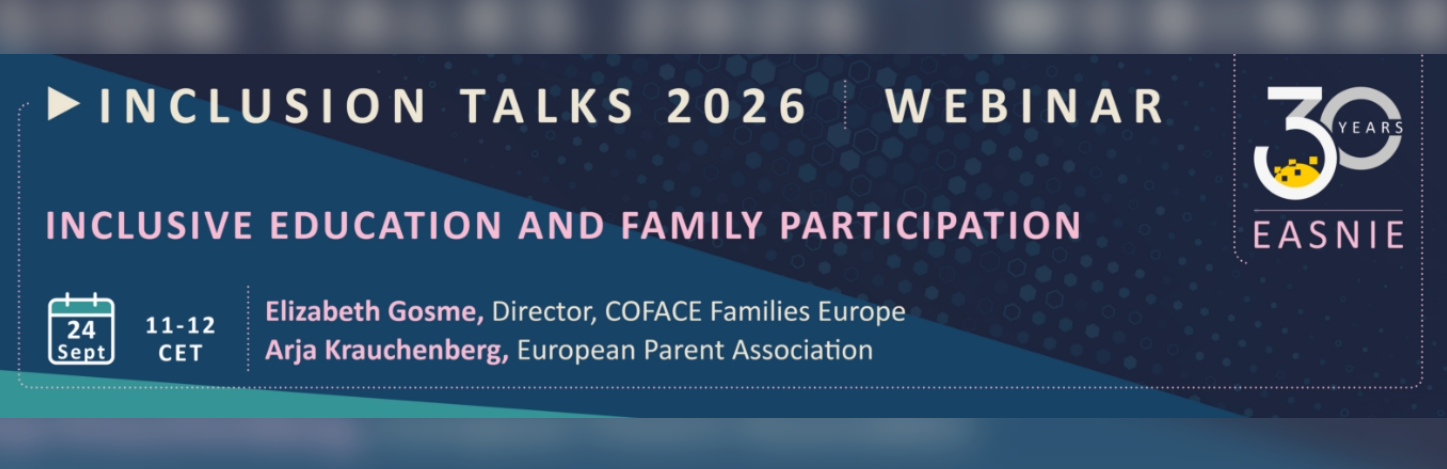
We are pleased to share information about the upcoming Inclusion Talks 2026 webinar, organised by EASNIE as part of this year’s thematic series on inclusive education.
📅 When?
Thursday, 24 September 2026 // 11:00–12:00 (CET)📍Where and who ?
Online – open to all interested participants✅What is it about?
The session will highlight the critical role families play in inclusive education and will share effective practices for engaging parents and building strong home-school partnerships to support learners.🗣Speakers
- Elizabeth Gosme, COFACE Families Europe – Director.
- Arja Krauchenberg, European Parents' Association – Project Coordinator.
⬇️⬇️Please register via the link⬇️⬇️
Inclusion Talks Webinar – Inclusive Education and Family Participation
⬇️⬇️Full programme ⬇️⬇️
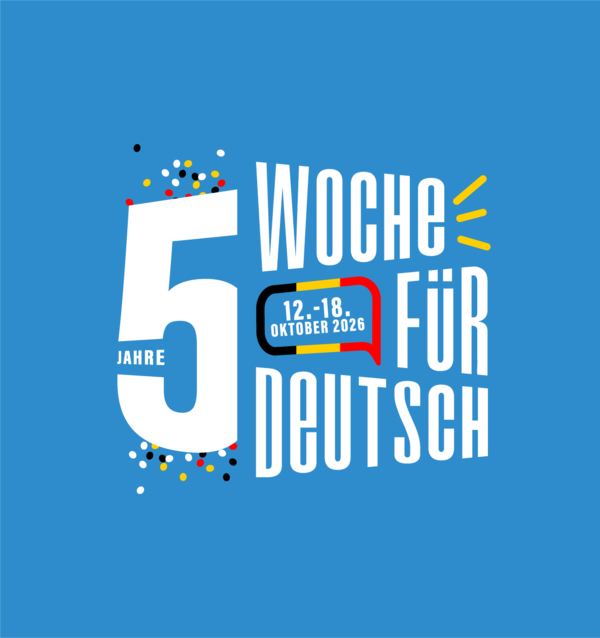
The Office of the Secretary-General of the European Schools (OSGES) is pleased to share the fifth edition of Woche für Deutsch (German Language Week), taking place across Belgium from 12 to 18 October 2026.
Organised by the German Embassy in Brussels together with several partner organisations, the initiative celebrates the German language and the cultures of the German-speaking world through a varied programme of educational and cultural activities.
📍 Activities across Belgium
🎓 For different language levels
The programme includes theatre, film, discussions, quizzes and interactive activities, offering learners the opportunity to discover German language and culture in an engaging and informal way.
Learners can take part in creative anniversary activities and in the “False Friends Unmasked!” social media competition, running from 14 September to 18 October 2026.
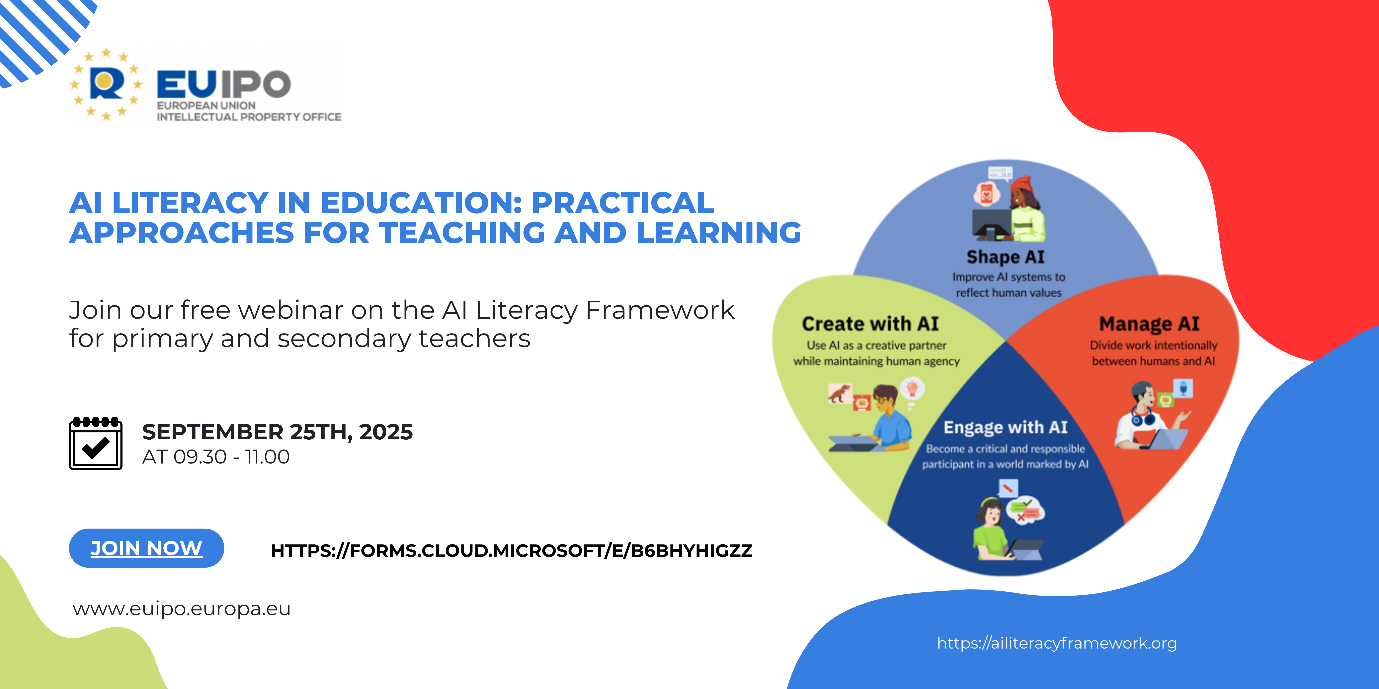
The Office of the Secretary-General of the European Schools (OSGES) is pleased to share an invitation to participate in the upcoming AI Literacy in Education: Practical Approaches to Teaching and Learning webinar, organised by the EUIPO Academy.
This free online session is designed for primary and secondary school teachers, educators and training providers, offering practical approaches to supporting AI literacy in schools.
🕓 09:30–11:00 (CEST)
💻 Online · Free webinar
The webinar is based on the recently published AI Literacy Framework, developed by the European Commission and the OECD and translated into all 24 EU languages. Two members of the AILit expert group will present practical approaches to integrating AI literacy into teaching and learning.
The framework also connects with the PISA 2029 Media & AI Literacy (MAIL) assessment, helping prepare students for an increasingly AI-shaped world.
Participants will:
- Explore the AI Literacy Framework and its relevance to schools
- Discover practical approaches to teaching AI literacy
- Learn about its connection with the PISA 2029 MAIL assessment
Participation is free, but registration is necessary to attend the webinar.